Pomiń, aby przejść do informacji o produkcie
1 z 3

R2OT

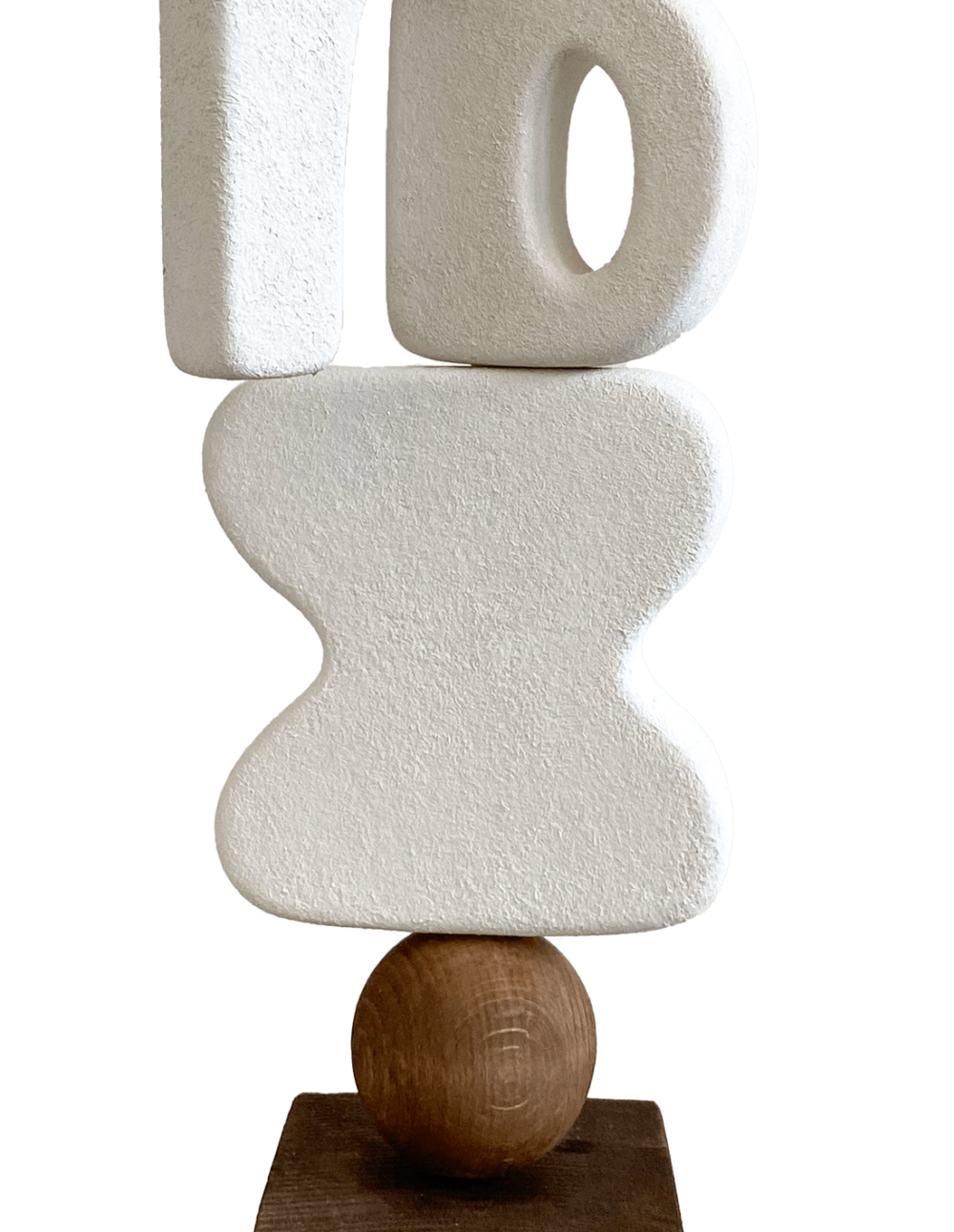
AMÉLIE DAUTEUR – "Jin"

AMÉLIE DAUTEUR – "Jin"

Cena regularna €907,95 EUR
Cena regularna Cena promocyjna €907,95 EUR
W promocji Sprzedany
Z wliczonymi podatkami.

2026
4/12
Painted ceramic on a wooden base
Height: 50 cm

JIN

The character jin (仁) sits at the root of Confucian ethics, where it names not a single virtue among others but the ground from which all virtue proceeds: benevolence, humaneness, the capacity to feel the suffering of another as one's own. Confucius, in the Analects, refused to define it once and for all — pressed by his disciples, he gave a different answer each time, as though jin could only be approached obliquely, through its enactments rather than its definition. Etymologically, the character pairs 人 (person) with 二 (two): humaneness as what arises only between two people, never in isolation. It is relational before it is moral.

The character traveled beyond ethics into naming itself, where jin became one of the most common elements in Japanese given names, carrying into ordinary life the quiet charge of its philosophical origin — a hope lodged in a syllable.

With this totem, Amélie Dauteur takes up a virtue that Confucius himself declined to fix, choosing instead to let it surface only in relation, only between. Where jin (仁) shares its sound but not its character with other words — 神 (kami/shin, the sacred), 陣 (formation, encampment) — the homophony is not etymology, and the two should not be conflated; the totem's charge lies in the ethical root alone, in a goodness that exists only as it is exercised toward another.

JIN does not ask to be possessed. It asks: toward whom does your humaneness turn?

Pokaż kompletne dane
  • PRZED R2OT

    Wykształcona w świecie dekoracji, mody i luksusu, Amélie Dauteur tworzy rzeźbiarskie totemy charakteryzujące się wyrafinowanym kunsztem i radosną elegancją. Jej prace były wystawiane w Europie. Jej prace można zobaczyć w galeriach we Francji i Belgii.

  • DLACZEGO TO KOCHAMY

    Bo wywołują uśmiech, uspokajają i przypominają o magii ukrytej w prostych formach. To współczesne artefakty, które doskonale prezentują się w nowoczesnych wnętrzach.

  • NASZA RADA

    Postaw je na stoliku konsolowym lub na półce — jako pojedyncze elementy lub jako część małej, starannie dobranej kolekcji.

Amelia Dauteur

„Okashi, Hosu, Niji, Taboo, Torio – każda z nich to urocza nazwa, tworząca las totemów stworzonych przez Amélie Dauteur. Totemy Amélie Dauteur to poetyckie wykrzykniki, które podkreślają artystyczną scenę swoją gracją, finezją i radosnym pięknem. Nic dziwnego – ich autorka, wywodząca się ze świata dekoracji, mody i luksusu, wkłada w ich wykonanie wyjątkową dbałość. Jej gest jest pewny, technika dopracowana, a w wyborze materiałów – ręcznie malowanej ceramiki lub drewna kształtowanego przez czas – nic nie jest dziełem przypadku. Te elementy, zaczerpnięte z natury, podkreślają pierwotny i zmysłowy charakter totemów”.

Przeczytaj więcej